
Hydraulic Pump and Motor Codes: How to Read A10VO, A2FO and A4VTG
The hydraulic pumps and motors in concrete pumps and mixers often come from well-known code families. Understanding the code saves you from ordering the wrong size or direction.
Published
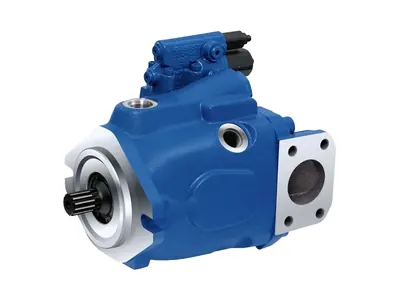
What the code tells you
| Code | What it is | What the number means |
|---|---|---|
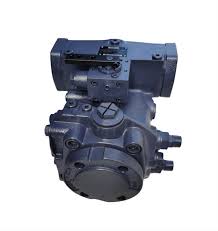
| A10VO28 | A variable-displacement axial piston pump for an open circuit. | Size 28 cm³ per revolution (nominal). |
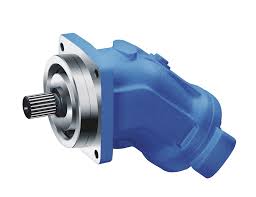
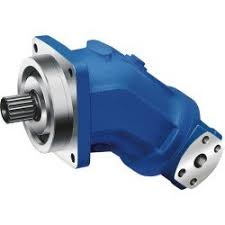
| A2FO23 | A fixed-displacement axial piston pump for an open circuit. | Size 23 cm³ per revolution (nominal). |
| A2FM80 | A fixed-displacement axial piston hydraulic motor, used in mixer drum drives. | Size 80 cm³ per revolution (nominal). |
| A4VTG90 | A variable-displacement pump for a closed circuit, used to drive mixer drums. | Size 90 cm³ per revolution (nominal). |
These are code families from Bosch Rexroth. A code shown in the catalogue describes the part and its size and does not by itself mean the part comes from that maker, so ask us about the type as in original vs alternative.
Direction of rotation
After the code comes an R or an L. R means clockwise rotation and L the opposite, looking at the end of the drive shaft. Two pumps of the same size but different directions do not swap. In the catalogue you will see names such as “Hydraulic Pump R A10VO28” and “Hydraulic Pump L A10VO28”.
Why the short name is not enough
- The full code on the plate is longer than the short name, with letters for series, control type, shaft and ports.
- Two pumps of the same size with different end letters may not swap in mounting or control.
- Do not swap A10VO28 for A10VO18 or the reverse: the size changes, so the flow and drive torque change.
- Photograph the whole plate and send it as in how to find the part number.
After you buy
If the system runs hot or the pump is weak, do not buy a pump until checks show it is the cause. Start with slow or weak output and hydraulic oil overheating. Motor seal kits are under seals, and you may not need a new pump.
Parts from the catalogue
Related categories
Quick questions
What does the number in A10VO28 mean?
It is the pump size, the nominal displacement in cubic centimetres per revolution. Here it is 28.
What is the difference between R and L?
R is clockwise and L is counter-clockwise, looking at the shaft end. Order the same direction as on your pump.
Can I fit an A10VO28 in place of an A10VO18?
No. The size is different, so flow and torque change, and the mounting and control may differ too.
Where is the pump's data plate?
A small plate on the pump or motor body. If the numbers have worn off, send a photo of the part and the machine make and model and we identify the right one.
Read next
- Concrete Pump Wear Parts: What Wears Out and When to Replace ItThe main wear parts of a concrete pump: spectacle plate, cutting ring, S-valve, pistons, pipes and elbows. Signs of wear and what to replace together.
- Concrete Pump Parts and Their Names in Arabic and English: A Plain GlossaryNames of concrete pump parts in Arabic and English: hopper, agitator, S-valve, spectacle plate, cutting ring, delivery cylinders and cooler, with what each part does.
- Spectacle Plate and Cutting Ring: Signs of Wear and When to Replace ThemWhen to replace the spectacle plate and cutting ring on a concrete pump: signs of wear, why they are replaced as a pair, and what to send us so we identify the right parts for your pump.
- Hydraulic Oil Overheating in a Concrete Pump: Causes and What to Check FirstWhy the hydraulic oil overheats on a concrete pump: cooler and fan, oil level, filters and pump wear. A check order from easiest to hardest.
- Concrete Pump Slow or Weak Output: Possible Causes and What to CheckIf a concrete pump's output drops: check the concrete and the line, then the spectacle plate and cutting ring, the delivery pistons, the filters and the hydraulic pump. A table of symptoms and causes.
- Concrete Pump Maintenance Checklist: After Every Pour, Daily and Periodic ChecksA practical concrete pump maintenance checklist: cleaning after pumping, daily oil and water checks, and periodic checks of filters and wear parts. Exact intervals come from your machine's manual.
- Blog
- Heavy equipment parts