
Original vs Alternative Spare Parts: What to Check Before You Buy
When you buy a spare part for concrete equipment you will hear the words “original” and “alternative”. Choosing the right type depends on the part and on the job. This guide explains the terms and what to check before you pay, whoever the seller is.
Published
What the words mean
- Original (OEM) part: made by, or for, the machine maker and carrying the maker's reference number.
- Alternative (compatible) part: made by another company to fit the same machine. It may have its own number, and quality varies a lot from one maker to another.
What to check in both cases
- The part number or dimensions match the old part.
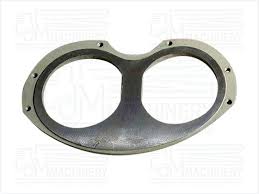
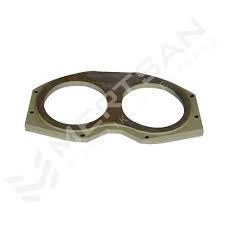
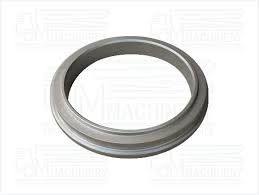
- Material: in wear parts such as the spectacle plate and cutting ring, the hardness of the metal sets the part's life, so ask about the material.
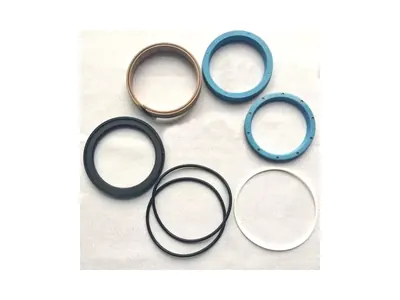
- Seal type, material and exact size.
- Country of manufacture, brand and packaging marks.
- Ask before you pay what happens if the part does not fit, and get the terms clearly.
Which one suits you
These are general guidelines, not a fixed rule:
- Internals of hydraulic pumps and motors, and control units: original is the safer choice unless you have a proven alternative for that exact part.
- Consumables such as pipes, hoses, filters and O-rings: there are many good alternatives, and the comparison is price against expected life.
- Wear parts: compare hardness and material, not price alone. A cheaper part that wears out faster can cost you more.
When you ask us for a price
All the parts we sell are original. With any other supplier, say in your message whether you need the machine maker's own part or whether a compatible alternative is enough, and check the part's brand and country of manufacture in the reply before you confirm. Send the part number or a photo on WhatsApp at +966 59 211 2782.
Parts from the catalogue
Related categories
Quick questions
Is an alternative part as good as the original?
It depends on the part and the maker. For wear parts compare material and hardness; for internal hydraulic parts the original is usually the safer choice.
How do I tell an original part from an alternative one?
An original part carries the machine maker's number and packaging. If you are unsure, ask the seller directly where the part comes from.
Read next
- How to Find the Part Number of a Concrete Pump Spare PartWhere to find the part number on a concrete pump or mixer, how to measure a part that has none, and what to send us on WhatsApp.
- How to Order Spare Parts from Product House in RiyadhHow to order heavy equipment spare parts from Product House Trading Est. in Riyadh: price on WhatsApp, delivery, opening hours and location.
- How to Choose a Concrete Pump Spare Parts Supplier in Riyadh: Eight Questions to Ask Before You PayEight questions to ask any concrete pump and mixer spare parts supplier in Riyadh before you pay: machine model, original or alternative, availability, invoice and delivery.
- Concrete Pump Wear Parts: What Wears Out and When to Replace ItThe main wear parts of a concrete pump: spectacle plate, cutting ring, S-valve, pistons, pipes and elbows. Signs of wear and what to replace together.
- Concrete Pump Parts and Their Names in Arabic and English: A Plain GlossaryNames of concrete pump parts in Arabic and English: hopper, agitator, S-valve, spectacle plate, cutting ring, delivery cylinders and cooler, with what each part does.
- Spectacle Plate and Cutting Ring: Signs of Wear and When to Replace ThemWhen to replace the spectacle plate and cutting ring on a concrete pump: signs of wear, why they are replaced as a pair, and what to send us so we identify the right parts for your pump.
- Blog
- Heavy equipment parts