
Concrete Pump Slow or Weak Output: Possible Causes and What to Check
“The pump is weak” fits ten different causes. This guide ties each symptom to its likely cause so you do not pay for a part you do not need.
Published
Before you open anything
Concrete that is too stiff or has segregated, or a long or partly blocked line, can make any pump look weak when it is fine. Check the mix, the line and the pump settings first.
Symptom and likely cause
| Symptom | Likely cause | Where to look |
|---|---|---|
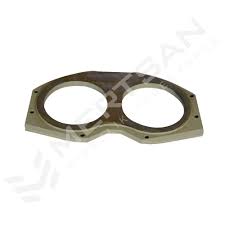
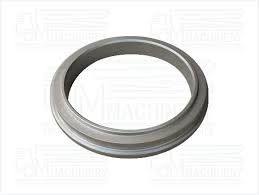
| Slurry leaks from the plate-and-ring joint and output drops | Worn spectacle plate and cutting ring. | Spectacle plate and cutting ring |
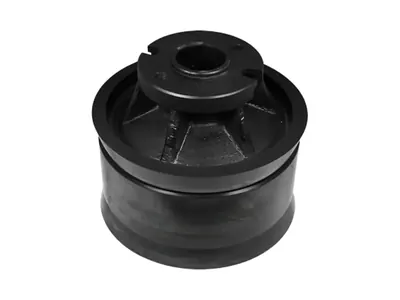
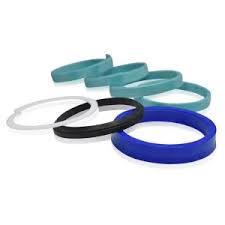
| Water in the water box turns grey or carries cement | Concrete passing the delivery piston, which can point to worn piston seals. | Pistons and seals |
| Slow pumping and hot oil | Cooler, fan, filter or oil. | Hydraulic oil overheating |
| Every movement is slow and the pressure reads low | Internal wear in the hydraulic pump. | Workshop test, then pumps |
| The S-valve is late or hesitates | Swing cylinder seals, a solenoid valve or coil, or accumulator charge. | Valves and seals |
| Intermittent stops or control faults | A limit switch, sensor or electrical connector. | Electrical |
Cheap checks first
- Filters: a clogged filter cuts the flow. See hydraulic filters.
- Solenoid coils, limit switches and sensors: small parts that are easy to test and replace.
- Pipes and elbows: a thin wall inside raises resistance and is a safety risk. See delivery pipes and elbows.
When to go to a workshop
Measuring hydraulic pump pressure and testing internal leakage need gauges and experience. Once the easier causes are ruled out, take the pump or motor to a hydraulic workshop, and send us the type code printed on it so we identify the replacement, as in hydraulic pump and motor codes.
Parts from the catalogue
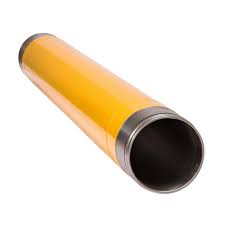
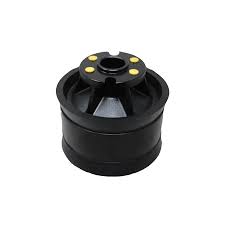
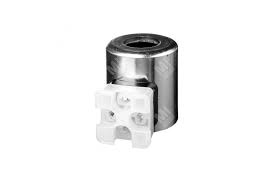
Related categories
Quick questions
Why does the water in the water box turn grey?
Grey water usually means cement slurry is getting past a delivery piston into the box, which can point to worn piston seals. Check them before the rods are damaged.
Can a clogged filter cause weak pumping?
Yes, because it cuts the oil flow and raises the temperature. Replacing it is one of the cheapest checks.
How do I know the hydraulic pump is worn?
Signs are noise, high temperature and slow movements with a low pressure reading. Confirmation needs a test in an equipped workshop.
Should I replace everything at once?
No. Identify the symptom first, then replace the part tied to it, and avoid buying parts before you have inspected.
Read next
- Concrete Pump Wear Parts: What Wears Out and When to Replace ItThe main wear parts of a concrete pump: spectacle plate, cutting ring, S-valve, pistons, pipes and elbows. Signs of wear and what to replace together.
- Concrete Pump Parts and Their Names in Arabic and English: A Plain GlossaryNames of concrete pump parts in Arabic and English: hopper, agitator, S-valve, spectacle plate, cutting ring, delivery cylinders and cooler, with what each part does.
- Spectacle Plate and Cutting Ring: Signs of Wear and When to Replace ThemWhen to replace the spectacle plate and cutting ring on a concrete pump: signs of wear, why they are replaced as a pair, and what to send us so we identify the right parts for your pump.
- Hydraulic Oil Overheating in a Concrete Pump: Causes and What to Check FirstWhy the hydraulic oil overheats on a concrete pump: cooler and fan, oil level, filters and pump wear. A check order from easiest to hardest.
- Concrete Pump Maintenance Checklist: After Every Pour, Daily and Periodic ChecksA practical concrete pump maintenance checklist: cleaning after pumping, daily oil and water checks, and periodic checks of filters and wear parts. Exact intervals come from your machine's manual.
- Hydraulic Filters on a Concrete Pump: Types, When to Replace and How to OrderTypes of hydraulic filter on a concrete pump, the signs of clogging, when to replace them, and how to order the right filter by the number printed on it.
- Blog
- Heavy equipment parts